Today, at a Town Hall meeting associated with his so-called listening (bus) tour, Obama took a lot of time out from listening and, instead, spent much of his time lecturing, blaming, and complaining. One of his "lectures" was to admonish the auto industry for focusing too much on trucks and SUVs. Chiding the auto companies, he said: “You can’t just make money on SUVs and trucks. There is a place for SUVs and trucks, but as gas prices keep on going up, you have got to understand the market. People are going to try to save money.”
Well, gee, Mr. President! Once again you don't seem to understand either capitalism or business. In capitalism, the consumer decides what "they" want to buy and the businesses will respond in kind. If a consumer wants small (dangerous) cars that are fuel efficient, they will buy them in droves and the automakers will shift their production to those kinds of vehicles.
You see, Mr. President, the people of this country like their freedom of choice; and, right now, they like trucks and SUVs. It is not normal in our society to have some crap rammed down our throats; like the mandates of ObamaCare or, even, smaller cars. Telling auto companies to only build small cars might work in some authoritarian communist societies, but not in ours!
Showing posts with label auto companies. Show all posts
Showing posts with label auto companies. Show all posts
Monday, August 15, 2011

Monday, March 30, 2009
About the Firing of GM's CEO
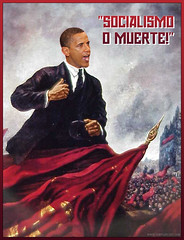 In today's announcement of further bailout monies for the Auto Industry, Barack Obama stated that the government has no intention of running the auto companies. Oh, really?
By demanding a restructuring plan from any corporate entity, the government is effectively running that company. Further, by telling a company to fire it's CEO, the government is running that company. Telling a company what they can or can't pay their execs or what bonuses they can give out is running a company. Telling them that they can't have corporate jets or that they are not allowed to have off-site meetings is running a company.
As soon as any bailout money was given to any Bank or auto company, the Obama Administration decided that they could tell those companies how they should operate. It is just plain disingenuous for Obama to say otherwise.
Furthermore, Obama/Geithner want even more control of American business; even those who haven't received bailout funds; but, who are "determined" to be essential to America's economic health. In theory, that could include a profitable company like Microsoft because they have 90 percent control over personal computing in both this country and in the world.
Make no mistake about it. Obama is using this crisis to effect the biggest government takeover of business outside of what has only been previously done in many 3rd world dictatorships. We still have 3 years and 10 months got go with this guy before, hopefully, he's voted out of office! God save capitalism in the United States!
Image of "Socialism Or Death" by templar1307's photostream on Flickr with Creative Commons Licensing. Some rights retained. (Click to View Other Works).
Friday, March 6, 2009
When Will This Recession End?
Recessions are natural processes in any free market economy. They usually happen when severe "excesses" build up. You can compare them to a forest that is overgrown with excessive dead wood, leaves, and dry underbrush. At some juncture, a lightning strike will take it out so that the forest can grow anew and without all that dangerous tinder.
The formation of "this" recession wasn't just the housing market and the bunch of toxic home loans. There was an excess in spending in America with no savings and a massive increase in credit card debt. Too much credit gave this country the purchasing power that it wasn't entitled too. All these things placed high levels of demand on the housing and consumer markets; which, in turn, resulted in higher and higher valuations of our homes and massive increases in the number of stores for consumer items. To top all that off, our Federal government, too, was living off of borrowed money through deficit spending.
Recessions end when the excesses are purged. For this recession to really end, all those excesses must somehow be shed from our economy. Unfortunately, the Obama administration would prefer to delay the inevitable by propping up failing companies and toxic assets with bailout money after bailout money. Bush did this too, but nothing to the extent that we are now seeing in the Obama administration. Worse yet, one of the excesses that is seriously growing out of control with this administration is the dramatic increase in government spending and deficits.
Somewhere along the line, the chickens will literally have to come home to roost. Companies with too much debt and falling sales will have to be allowed to fail and reorganize or go under due to bankruptcy. People in homes that they can't afford have to be shed from the system. Corporations in trouble will have to automatically adjust excessive pay and benefits, and government spending has to get under control.
People are already lowering their credit card debt through reduced consumer spending and savings. That's a good thing. But, our governments at the local, state, and federal levels still haven't come to grips with this economy and aren't willing to reduce spending and move away from the notion that governments are the mommys and daddys of the people. And, that's a very bad thing.
Normally, recessions work themselves out in about 16 to 20 months. That's why a lot of economists believe that no action may actually result in a faster recovery. But, we know that politicians won't let that happen. Politicians always have to look like they are doing something; even if the something is doing more harm than good.
All of the above then brings us to answering the question that was posed in the title of this blog entry.
I think we are creating an even harder row to hoe than need be, because of too much bleeding-heart government intervention. It's that simple. The Federal spending is too targeted to easing pain and is not focused on the real factors that will get this country moving again. Most everything that is being done is a band aid to treat the symptoms and will not force a real cure. I see an emotional response to people being out of work and people losing their homes and not a rational response to the "why" that is driving all this economic blood letting. The "why" is lack of consumer spending and the overall lack of credit availability for both people and business.
A perfect example of this is the auto companies. While the Federal government is pouring billions into saving those companies, the people who could really save those companies, the consumers, aren't buying cars. They're not buying them from GM, Ford, or Chrysler, and their not buying them from Toyota, Nissan, or Mercedes, either. While there are structural problems in the U.S. auto companies that are making them insolvent, the lack of consumer activity is just exacerbating those problems. If the consumer was back in the game, the downward slide of those auto companies would be greatly lessened.
The broad base of consumers are in retreat and the Stimulus package will only benefit a small fraction of that consumer base. It is literally designed to directly benefit union workers in automotive manufacturing, light and heavy construction, through-high school educators, law enforcement and fire fighting personnel. All of this is simply political payback and will have no effect on getting the workers in the service industries or other areas of manufacturing to start buying things. There will be some benefit to the workers in the support areas of building materials and in raw materials such as concrete and asphalt; but, in the overall scheme of things, that will be minuscule. All the union jobs in this country combined, still only add up to less than 13 percent of the active workforce . That means that the Stimulus Package is really ignoring 86 percent of the total workforce.
Even when this country starts to stabilize, there's going to be a big tax debt to pay off. Further, all that debt that was and is being accumulated will only devalue our currency and force the cost of imported goods to rise rapidly; and, the buying of imported goods makes up the bulk of this country's consumer activity. We have literally become a "Buy Chinese" country. This will be the start of rampant inflation. This will force wage pressures; and, the resulting compensation for wages falling behind prices will only push prices even higher. Wage inflation is one of the most difficult aspects of inflation to control. Traditionally, it is wage inflation that refuses to abate in any inflationary recovery as workers try to match their wages with the higher cost of things. Wage inflation only dissipates when wages and prices have reached some broadly acceptable equilibrium.
I think we're headed in the same direction that Japan was with their lost decade or longer of stagnation and inflation. I've read and listened to many a commentary and I am consistently hearing a chorus of concern about what is being done. These people aren't politically motivated or have a love-bias towards Obama. Most, I think, are actually Democrats. These are people who are realists and who have lived through the Carter recession and have done a lot of research into the Great Depression and what was done in the 1990's in Japan.
Now, to be fair, it is possible that the influx of spending in those concentrated areas of economy such as infrastructure rebuilding will actually have a "spreading" effect as predicted by all those academics who seem to be advising Obama. However, academics aren't hardly noted for being attuned to business or the realities of our economy. It's easy to make theoretical predictions without any economic impact on your own personal financial situation. Its extremely rare to find an academic who's theoretical work has actually benefited themselves financially. That's the problem I see with Obama. Too much theory and not enough practicality. And, that's just my opinion.
The formation of "this" recession wasn't just the housing market and the bunch of toxic home loans. There was an excess in spending in America with no savings and a massive increase in credit card debt. Too much credit gave this country the purchasing power that it wasn't entitled too. All these things placed high levels of demand on the housing and consumer markets; which, in turn, resulted in higher and higher valuations of our homes and massive increases in the number of stores for consumer items. To top all that off, our Federal government, too, was living off of borrowed money through deficit spending.
Recessions end when the excesses are purged. For this recession to really end, all those excesses must somehow be shed from our economy. Unfortunately, the Obama administration would prefer to delay the inevitable by propping up failing companies and toxic assets with bailout money after bailout money. Bush did this too, but nothing to the extent that we are now seeing in the Obama administration. Worse yet, one of the excesses that is seriously growing out of control with this administration is the dramatic increase in government spending and deficits.
Somewhere along the line, the chickens will literally have to come home to roost. Companies with too much debt and falling sales will have to be allowed to fail and reorganize or go under due to bankruptcy. People in homes that they can't afford have to be shed from the system. Corporations in trouble will have to automatically adjust excessive pay and benefits, and government spending has to get under control.
People are already lowering their credit card debt through reduced consumer spending and savings. That's a good thing. But, our governments at the local, state, and federal levels still haven't come to grips with this economy and aren't willing to reduce spending and move away from the notion that governments are the mommys and daddys of the people. And, that's a very bad thing.
Normally, recessions work themselves out in about 16 to 20 months. That's why a lot of economists believe that no action may actually result in a faster recovery. But, we know that politicians won't let that happen. Politicians always have to look like they are doing something; even if the something is doing more harm than good.
All of the above then brings us to answering the question that was posed in the title of this blog entry.
I think we are creating an even harder row to hoe than need be, because of too much bleeding-heart government intervention. It's that simple. The Federal spending is too targeted to easing pain and is not focused on the real factors that will get this country moving again. Most everything that is being done is a band aid to treat the symptoms and will not force a real cure. I see an emotional response to people being out of work and people losing their homes and not a rational response to the "why" that is driving all this economic blood letting. The "why" is lack of consumer spending and the overall lack of credit availability for both people and business.
A perfect example of this is the auto companies. While the Federal government is pouring billions into saving those companies, the people who could really save those companies, the consumers, aren't buying cars. They're not buying them from GM, Ford, or Chrysler, and their not buying them from Toyota, Nissan, or Mercedes, either. While there are structural problems in the U.S. auto companies that are making them insolvent, the lack of consumer activity is just exacerbating those problems. If the consumer was back in the game, the downward slide of those auto companies would be greatly lessened.
The broad base of consumers are in retreat and the Stimulus package will only benefit a small fraction of that consumer base. It is literally designed to directly benefit union workers in automotive manufacturing, light and heavy construction, through-high school educators, law enforcement and fire fighting personnel. All of this is simply political payback and will have no effect on getting the workers in the service industries or other areas of manufacturing to start buying things. There will be some benefit to the workers in the support areas of building materials and in raw materials such as concrete and asphalt; but, in the overall scheme of things, that will be minuscule. All the union jobs in this country combined, still only add up to less than 13 percent of the active workforce . That means that the Stimulus Package is really ignoring 86 percent of the total workforce.
Even when this country starts to stabilize, there's going to be a big tax debt to pay off. Further, all that debt that was and is being accumulated will only devalue our currency and force the cost of imported goods to rise rapidly; and, the buying of imported goods makes up the bulk of this country's consumer activity. We have literally become a "Buy Chinese" country. This will be the start of rampant inflation. This will force wage pressures; and, the resulting compensation for wages falling behind prices will only push prices even higher. Wage inflation is one of the most difficult aspects of inflation to control. Traditionally, it is wage inflation that refuses to abate in any inflationary recovery as workers try to match their wages with the higher cost of things. Wage inflation only dissipates when wages and prices have reached some broadly acceptable equilibrium.
I think we're headed in the same direction that Japan was with their lost decade or longer of stagnation and inflation. I've read and listened to many a commentary and I am consistently hearing a chorus of concern about what is being done. These people aren't politically motivated or have a love-bias towards Obama. Most, I think, are actually Democrats. These are people who are realists and who have lived through the Carter recession and have done a lot of research into the Great Depression and what was done in the 1990's in Japan.
Now, to be fair, it is possible that the influx of spending in those concentrated areas of economy such as infrastructure rebuilding will actually have a "spreading" effect as predicted by all those academics who seem to be advising Obama. However, academics aren't hardly noted for being attuned to business or the realities of our economy. It's easy to make theoretical predictions without any economic impact on your own personal financial situation. Its extremely rare to find an academic who's theoretical work has actually benefited themselves financially. That's the problem I see with Obama. Too much theory and not enough practicality. And, that's just my opinion.
Friday, December 12, 2008
Bush's Dilemma: The Auto Bailout
Last night, the auto company bailout died in the Senate. This was all due to a strong block of Republicans opposing it. This morning, the White House announced that they will use the TARP (Troubled Assets Relief Program) or, in other words, the previously approved Congressional bailout money (the famous $700 billion)to provide a temporary bridge until Congress reconvenes.
Bush is doing this because he doesn't want to be seen as the "President who killed the auto industry in America." He also doesn't want to be associated with providing government funding and the subsequent debt to an auto industry that he and most people feel will continue to fail. That's because anyone with an ounce of brain power knows that funding without deep restructuring will just wind up being political suicide down the road. Instead, he would like to leak just enough money to get the autos limping into the next Administration's hands. This way, the full $35 billion needed by the auto companies will be tagged to Barack Obama and the Democrats. Then, if that money fails to resuscitate the autos, the whole mess will be sitting squarely in the laps of the Democratic party: from Barack to Reid to Nancy Pelosi.
For sure, the auto companies will get their help through to the next Congress; but, without any Republican senatorial help. The Democratic leadership will not be happy because they wanted the Republicans to be in bed with them on this. That way, the Democrats would have had political cover in the event that this funding doesn't work (Which it won't!). But, on the other hand, the Democrats will be somewhat happy because they will have been seen as working with Bush to save the auto companies and the United Auto Workers union. Bush will be happy because he will be able to "Pontius Pilot" himself from this problem and not have it be another stain on his legacy. The auto companies won't be too sad because they know that they will ultimately get their full amount of funding when Congress reconvenes under a new President. Now, is everybody happy?
Bush is doing this because he doesn't want to be seen as the "President who killed the auto industry in America." He also doesn't want to be associated with providing government funding and the subsequent debt to an auto industry that he and most people feel will continue to fail. That's because anyone with an ounce of brain power knows that funding without deep restructuring will just wind up being political suicide down the road. Instead, he would like to leak just enough money to get the autos limping into the next Administration's hands. This way, the full $35 billion needed by the auto companies will be tagged to Barack Obama and the Democrats. Then, if that money fails to resuscitate the autos, the whole mess will be sitting squarely in the laps of the Democratic party: from Barack to Reid to Nancy Pelosi.
For sure, the auto companies will get their help through to the next Congress; but, without any Republican senatorial help. The Democratic leadership will not be happy because they wanted the Republicans to be in bed with them on this. That way, the Democrats would have had political cover in the event that this funding doesn't work (Which it won't!). But, on the other hand, the Democrats will be somewhat happy because they will have been seen as working with Bush to save the auto companies and the United Auto Workers union. Bush will be happy because he will be able to "Pontius Pilot" himself from this problem and not have it be another stain on his legacy. The auto companies won't be too sad because they know that they will ultimately get their full amount of funding when Congress reconvenes under a new President. Now, is everybody happy?
Monday, November 24, 2008
The Auto Show of Shows
Last week and all weekend, a lot has been made of the auto industry execs flying in on separate jets to meet with Congress. However, that's just a lot of media "fog" and the real story has to do with their actual testimonies. The Congress sent them home without the cash because they went to Washington without any facts or plans to support their need for billions of taxpayer dollars. As a consequence, they were sent home and were told to come up with a "business plan" that would say how the money would be used and how they would change their businesses to become profitable. There isn't a "dah" big enough for this one!
Basically, the auto execs thought they had this one in the bag because of the millions in lobbying money and campaign contributions they had given. Further, the relationship of the United Auto Workers union (UAW) and the Democrats, and all the get-out-the-vote work that was done by the union membership in this last election, made the cash handout a done-deal in their minds. There was no humility on their part. There was no shame at being unable to keep their businesses afloat. After all, these are extremely well-paid people (that's an understatement!) who are supposed to have their fingers on the pulse of the company. However, the only real business argument that they could come up with for getting the cash was: If you don't give the money, thousands would be left unemployed. No facts to even support that claim.
If they were really concerned about the results of their trip to Washington, they would have huddled beforehand and continued to discuss their tactics before Congress while flying "together" on a single private jet. But, they just treated this whole trip as an "necessary" waste of time.
The performance by the auto execs (if you could even call it that) is a perfect example of the symbiotic relationships that some businesses have and will continue to have in Congress. This "business plan" thing is just a ruse. Nancy Pelosi has already implied that she will give the money when the auto companies return to Washington in December. We know that, because she said that "bankruptcy" was off the table. That means the cash is the only direction. The business plan thing is merely being done for marketing purposes to make the Congress look tough (Right!) and to wash away the embarrassment of those execs flying in on private jets. The only thing that the auto companies really lost on their trip to D.C. was two weeks and any positive P.R.
As I said in my blog of last week, they'll be back when this money runs out. Probably in just a year. Mark my words.
Basically, the auto execs thought they had this one in the bag because of the millions in lobbying money and campaign contributions they had given. Further, the relationship of the United Auto Workers union (UAW) and the Democrats, and all the get-out-the-vote work that was done by the union membership in this last election, made the cash handout a done-deal in their minds. There was no humility on their part. There was no shame at being unable to keep their businesses afloat. After all, these are extremely well-paid people (that's an understatement!) who are supposed to have their fingers on the pulse of the company. However, the only real business argument that they could come up with for getting the cash was: If you don't give the money, thousands would be left unemployed. No facts to even support that claim.
If they were really concerned about the results of their trip to Washington, they would have huddled beforehand and continued to discuss their tactics before Congress while flying "together" on a single private jet. But, they just treated this whole trip as an "necessary" waste of time.
The performance by the auto execs (if you could even call it that) is a perfect example of the symbiotic relationships that some businesses have and will continue to have in Congress. This "business plan" thing is just a ruse. Nancy Pelosi has already implied that she will give the money when the auto companies return to Washington in December. We know that, because she said that "bankruptcy" was off the table. That means the cash is the only direction. The business plan thing is merely being done for marketing purposes to make the Congress look tough (Right!) and to wash away the embarrassment of those execs flying in on private jets. The only thing that the auto companies really lost on their trip to D.C. was two weeks and any positive P.R.
As I said in my blog of last week, they'll be back when this money runs out. Probably in just a year. Mark my words.
Tuesday, November 18, 2008
GM: A $25 Billion Bandaid on a Fatal Wound
 General Motors (GM) and, for that matter, all three of the American auto companies are at a point, now, where they have to come to grips with the realities of going bankrupt. Any Federal bailout money will just delay the inevitable. It doesn't matter if they retool for more fuel efficient cars or not. Actually, retooling will just increase their expenses and their losses. The real problem with our Detroit-based auto industry is a structural one. GM is losing over $1800 a car and they will continue to lose $1800 a car after the bailout. It doesn't matter if they are selling hybrid's or electric cars or one of their highly fuel-inefficient Humvee's. Even if GM was able to sell twice as many cars as it does right now, the loss per car would still be $900 a car. Quite frankly, with oil prices falling as fast as they are, having a fleet of fuel efficient vehicles isn't as important as it was just a few months ago. The conditions for the loss will remain; with or without the bailout monies. The real problem is not the loss of sales.
GM's biggest problem is that it has enough retired pensioners and their surviving spouses to replace the entire population of the City of Detroit. That's more than quadruple the number of active, world-wide employees. Similarly, the number of retirees at Ford and Chrysler, combined, would also replace the population of the "Motor City." Taken all together, those 2 million pension holders at GM, Ford, and Chrysler are equal to the entire population of this nation's 4th largest city: Houston, Texas. Much of Michigan's auto industry revenues are being eaten up in the funding of pensions. In effect, every employee at GM, Ford, and Chrysler is literally working to support 4 retirees. Further, more than half of those pensioners are getting paid health care for life. All those retirees are living longer and, because of that, they will need more company-paid heath care services in the years to come.
GM apparently didn't learn from their own past. When the railroads in America converted to the diesel engines, mostly made by GM, the efficiency of those new locomotives was lost because the railroad worker's unions demanded and obtained contracts which maintained obsolete coal tenders on board each new diesel locomotive. They already had obsolete brakemen on board as a result of past contracts. Like the union auto contracts of today, the railroads were burdened with higher and higher costs for pensions. Taking advantage of this cost inefficiency, GM (for both trucks and engines), White, and other truck builders in America converted their trucks from gasoline to the more efficient diesel fuel. This fact also allowed them to increase the gross weight that each truck could carry; making the cost of transporting cargo more economical than rail. Then, lobbying our government, the highway weight restrictions for trucks was upped on all the roads of the then-new interstate highway system. Ultimately, the trucking industry was able to kill hundreds of inefficient and labor-burdened railroad companies with excess pension by moving freight more efficiently and at lower cost by truck. GM did, then, what Toyota and the other domestically-based foreign companies are doing to GM, now.
The lesson is one of both productivity and mechanical efficiency versus labor inefficiency. Toyota, Nissan, Honda, BMW, Mercedes, and Hyundai all have plants in America that are efficiently and cost effectively pumping out cars. They, too, have been hit with slowing sales due to the credit crunch and recession but, unlike GM, they are not in any serious trouble. They have no labor unions or massive group of pensioners and are not saddled with contracts covering work rules, vacations, retirement age, etc. and those that limit the use of manufacturing robots. Their plants are highly efficient and that is one of many reasons (along with the cost for active and retired labor) why GM, Ford and Chrysler have been unable to raise prices to cover their losses. Quite frankly, the U.S. based Asian auto manufacturers' management were smart to be more consistent with fuel efficiency in their vehicles than the Americans were with their emphasis on gas-guzzling SUV's. The market, which had already been strong for the Asian auto builders in America, only got stronger as the price for fuel went up. In contrast, GM, Ford, and Chrysler all lost sales for their gas-guzzlers as prices for oil hit record highs.
This problem with GM didn't just happened. Over the last 40 years they have gone from 53 percent of the domestic market to below 20 percent. Now, they are nearly in a tie with Toyota for total domestic sales. They have too many car lines with too many duplicate classes of vehicles. In comparison Toyota only has three lines in America (Toyota, Lexus, & Scion). In the year 2000, GM stock was selling at an all time high of $94 dollars a share. Since then, the decline in the stock price has been a near-perfect straight line to last week's low of $2.75. Ford has moved from a high of $38 per share in 1999 to last week's low of $1.72. Obviously, the traders in the stock market had seen the writing on the wall as early as 9 years ago; starting with Ford.
In my mind, GM and the others should be allowed to take the shock of bankruptcy. The billions of dollars in proposed Federal funding should be used to fund GM's underfunded remainder of their pension responsibilities under a Congressional Act of 2006. The Congress should, then, mandate the Federal government's Pension Benefits Guarantee Corporation (PBGC) to assume the pension responsibilities of the company. The same would be true for both Ford and Chrysler. All existing active labor contracts should considered to be negotiable; with those negotiations aimed at more reasonable health and retirement benefits and age of retirement. The plant robotics and work rules issues should also be revisited. GM, more than Ford or Chrysler, should look to slimming the number of makes and models. This will focus engineering, parts, and production on just a few lines of cars and would eliminate the redundant overlap of lines that they have today. Some workers will definitely lose their jobs. Some dealers will have to shut their doors. But, the union should look at this as a semi-blessing because the consequences of GM completely going out of business would be much more detrimental to their overall membership.
With the pension burden gone, the auto industry should be able to remake themselves and be more competitive. In the years forward, they should be able to regain market share and even hire more union labor. Our government should also spur auto sales by initiating the rebate program that I talked about in by blog entry the subject of creating jobs (See Full Story). If this is not done and the Federal money is just handed to the industry, GM will be back addressing the same "going out of business" problem of today in just a year or two from now when this money runs out and the losses are even bigger. Just mark my words.
Wednesday, November 12, 2008
The Great Corporate Depression
Those who lived through theyears of the Great Depression of the 1930's remember them well. They were the soup lines. Millions of Americans were out of work, poor, and without food. The historical photographs showed the anguish and suffering as people just tried to survive.
Today, we have something akin to those soup lines. Now those lines are made up of major financial institutions and corporations of America. All standing in line before the U.S. Treasury Department with their tin cups in hand looking for a mere few billion dollars to tide their businesses over during times of trouble. The shock waves that were sent out from the sub-prime mortgage mess are bringing some of corporate America to its knees.
In many cases, the corporations that looking for the handouts are in trouble because of bad business decisions and practices and weak management. Many, like the auto industry, have been in trouble for years. The auto industry, from Chrysler to Ford and to General Motors, is now teetering on the brink of non-existence. Circuit City may never recover as competition from the likes of Best Buy and even Wal-Mart may have finally sealed its coffin. American Express, just this morning, wants their share of keep-me-afloat money from the American taxpayers. Freddie Mac and Fannie May have their heads in their hands. Then, there's the bailout of all bailouts, the insurer, AIG.
AIG is the best example of complete management stupidity. First, they took nearly a 1/3 of a trillion dollars in taxpayer money to save their butts against their previously bad business decisions. Further, they got more taxpayer benefits because they were able to benefit from the lower interest rates that had been created when those rates were slashed by our Federal Reserve Bank. Instead of being humbled and greatly embarrassed by their own stupidity in almost losing their company, they decided to look the gift horse, us, in the mouth and laugh by spending hundreds of millions of dollars in junkets to some of the most lavish resorts in the world. I guess sea air, salt water, tanned bodies, and golf are more conducive to clear thinking than the laborious and smog-filled conditions of their home base in New York. Obviously, they must think that, as long as the government is footing the bill, no hard work is necessary.
Then, of course, there's the General Motors' example of corporate governance. They apparently are burning cash at a rate of more than a billion dollars per month. They now say they will be completely out of money by the middle of next year. So, why then, just three weeks ago, were they looking for a handout from you and I so they could buyout either all or part of Chrysler. What are they smoking over at GM? Only a madman would add another failing business to their already substantial repertoire of failing businesses. It would seem to me you would want to shed yourself of unprofitable businesses and not take on more!
I think the taxpayers are owed a better handling of this mess. I think that, if companies need taxpayer funding to survive, they should agree to certain conditions. First and foremost, an interim CEO should be appointed by our Treasury Department. There should be no golden parachutes or fat severance packages for the outgoing CEO. These people are already wealthy enough and totally undeserving of anything else from a company that they helped run into the ground. A new Board of Directors should be immediately elected by a special interim proxy vote by all shareholders. The list of names for the new Board should be twice as large as needed and developed from heads of companies that are currently financially sound. The debt that is incurred from taxpayer loans should have priority of repayment once the company becomes profitable. Further, the government should have repayment priority over all other lenders should the company continue to fail and have to file for bancruptcy.
If there are no severe conditions placed on companies for the welfare they are getting, then the list of companies who need financial help will just get longer and longer. A federal bailout should be a serious situation and a company must weigh the consequences of their actions.
Today, we have something akin to those soup lines. Now those lines are made up of major financial institutions and corporations of America. All standing in line before the U.S. Treasury Department with their tin cups in hand looking for a mere few billion dollars to tide their businesses over during times of trouble. The shock waves that were sent out from the sub-prime mortgage mess are bringing some of corporate America to its knees.
In many cases, the corporations that looking for the handouts are in trouble because of bad business decisions and practices and weak management. Many, like the auto industry, have been in trouble for years. The auto industry, from Chrysler to Ford and to General Motors, is now teetering on the brink of non-existence. Circuit City may never recover as competition from the likes of Best Buy and even Wal-Mart may have finally sealed its coffin. American Express, just this morning, wants their share of keep-me-afloat money from the American taxpayers. Freddie Mac and Fannie May have their heads in their hands. Then, there's the bailout of all bailouts, the insurer, AIG.
AIG is the best example of complete management stupidity. First, they took nearly a 1/3 of a trillion dollars in taxpayer money to save their butts against their previously bad business decisions. Further, they got more taxpayer benefits because they were able to benefit from the lower interest rates that had been created when those rates were slashed by our Federal Reserve Bank. Instead of being humbled and greatly embarrassed by their own stupidity in almost losing their company, they decided to look the gift horse, us, in the mouth and laugh by spending hundreds of millions of dollars in junkets to some of the most lavish resorts in the world. I guess sea air, salt water, tanned bodies, and golf are more conducive to clear thinking than the laborious and smog-filled conditions of their home base in New York. Obviously, they must think that, as long as the government is footing the bill, no hard work is necessary.
Then, of course, there's the General Motors' example of corporate governance. They apparently are burning cash at a rate of more than a billion dollars per month. They now say they will be completely out of money by the middle of next year. So, why then, just three weeks ago, were they looking for a handout from you and I so they could buyout either all or part of Chrysler. What are they smoking over at GM? Only a madman would add another failing business to their already substantial repertoire of failing businesses. It would seem to me you would want to shed yourself of unprofitable businesses and not take on more!
I think the taxpayers are owed a better handling of this mess. I think that, if companies need taxpayer funding to survive, they should agree to certain conditions. First and foremost, an interim CEO should be appointed by our Treasury Department. There should be no golden parachutes or fat severance packages for the outgoing CEO. These people are already wealthy enough and totally undeserving of anything else from a company that they helped run into the ground. A new Board of Directors should be immediately elected by a special interim proxy vote by all shareholders. The list of names for the new Board should be twice as large as needed and developed from heads of companies that are currently financially sound. The debt that is incurred from taxpayer loans should have priority of repayment once the company becomes profitable. Further, the government should have repayment priority over all other lenders should the company continue to fail and have to file for bancruptcy.
If there are no severe conditions placed on companies for the welfare they are getting, then the list of companies who need financial help will just get longer and longer. A federal bailout should be a serious situation and a company must weigh the consequences of their actions.
Subscribe to:
Posts (Atom)


 Posts
Posts