Showing posts with label gross domestic product. Show all posts

Monday, February 9, 2015

Our High Federal Debt is Killing Our Economy

Currently, our federal government debt stands above $18 trillion; up from $10.6 trillion when President Obama took office.  By the time he leaves office the debt be another $2 trillion larger and his latest "budget" -- as if spending more than you take in is budgeting -- will tack on another $6 trillion by 2025.  By that year, our federal debt will be at least $26.3 trillion.

The problem with increasingly high national debt is that it is killing this country's economic growth.

To that point, please examine this chart closely:

Click on image to enlarge
What is clearly shown is that, following World War II, we had massive debt that was 120% or 1.2 times (the red line) higher than the total output of our entire economy as measured by Gross Domestic Product (GDP); the blue line.  From that point forward, the country worked off that debt with positive budgeting.  Eventually, it decreased to a very manageable 31% of GDP by 1980.  During that time, our economy (GDP) grew at an average annual rate of 3.8%.  Then, Reagan came to office and, during his two terms, the debt-to-GDP ratio went from 32.5% to 53.1% and the average annual GDP growth slowed to 3.6%.

In 1993, Clinton came to office and because of an agreement he made with Newt Gingrich and his "Contract with America," he lowered the debt.  The ratio fell from 64% to 54% and the growth in GDP in his two terms returned to the post war average of 3.8%.  Still, over all, from 1981 to 2000, the average GDP growth was only 3.4%; primarily because of the "H.W." Bush recession.  Then in 2001, 9/11 hit and the U.S. started increasing the debt again with tax cuts and security measures; and, two wars in the Middle East.  Thus, under "W" Bush the debt ratio rose throughout his two terms in office and GDP growth was 1.8%.   Now, spending and debt accelerated under Obama and the debt ratio rose from 64% to over 100% in 2012 (on this chart); 105% as of right now.  GDP growth on his watch was slightly better than Bush at 1.9%.  But, understand that 1.9% included a better than average 2.5% growth in 2014 because of an accounting change that added intellectual property to the methodology in calculating GDP and, which, probably added a full percentage point growth to the 2014 number.  Thus, historical apples-to-apples growth calculation of GDP should have only been 1.5%.

Simply, high debt ratios kill economic growth.  If our economy continues to grow at 1.9% through 2025, the GDP will stand at $21.2 trillion and if out debt rises to the Obama Administration's projected $26.2 trillion, the debt ratio will be 123%.  A ratio higher than after World War II.  But, my guess is that the current 1.9% will fall as the debt ratio continues to rise.

I realize there are some out there who aren't buying the correlation of a high debt ratio to slowed GDP growth.  Then I would point to a country like Italy that has been growing their debt for decades.  In 2013, its debt ratio rose to 130.4% and its GDP growth looks like this:


Clearly, high debt has stymied Italy's economy and, I could show you similar charts for all those European countries that are in financial trouble.  This is why we, as a country, need to stop this debt accumulation because President Obama has already put us above the ratio of 100%. 

References:

President Barack Obama on Monday unveiled a $4 trillion fiscal year 2016 budget that will add more than $6 trillion to the national debt over the next 10 years: http://www.usnews.com/news/articles/2015/02/02/7-numbers-to-know-from-obamas-2016-budget

Obama Wants Huge Spending Hike As Debt Tops $18 Trillion: http://news.investors.com/ibd-editorials/011615-735155-obama-wants-to-bust-spending-caps-by-68-billion-dollars.htm

Projected Debt in 2025 Due to Obama's Budget: $26.3 Trillion:  http://www.weeklystandard.com/blogs/projected-debt-2025-due-obamas-budget-263-trillion_836791.html

Debt Clock: http://www.usdebtclock.org/

Debt under Reagan: https://www.google.com/search?q=debt+under+reagan&ie=utf-8&oe=utf-8

Really? The Fastest Growth In GDP Since 2003?: http://cuttingthroughthefog.blogspot.com/2014/12/really-fastest-growth-in-gdp-since-2003.html

Italian government debt - Wikipedia, the free encyclopedia: http://en.wikipedia.org/wiki/Italian_government_debt

Greece still bust, Spain depressed, Italy paralysed: https://thenextrecession.wordpress.com/2013/08/05/greece-still-bust-spain-depressed-italy-paralysed/

pb

Sunday, February 1, 2015

The Paradox of Weak Retail Sales & Durable Goods and the Surprising Consumer Strength In GDP

The Reuters headline on the latest GDP report was: "US economy cools in fourth quarter, but consumer spending shines."

What that headline refers to is these two sentences regarding consumer spending from the summary section of the fourth quarter Gross Domestic Product (GDP) report for the last quarter of 2014:
Real personal consumption expenditures increased 4.3 percent in the fourth quarter, compared with an increase of 3.2 percent in the third. Durable goods increased 7.4 percent, compared with an increase of 9.2 percent.
I have difficulty understanding where all this growth came from in personal consumption and durable goods purchases.  That's because separate monthly reports on retail sales and durable good orders tell a completely different story.

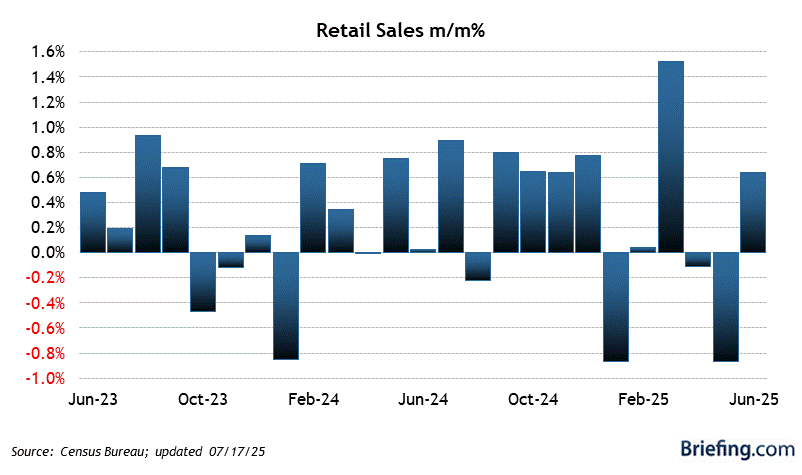
First, let's take a look at a chart of the percent of increase/decrease from month-over-month for retail sales (which is a component of personal consumption expenditures).
From this graphic, you can see retail sales fell by nearly a full percentage point in December.  In the prior two months, which rounds out the fourth quarter, month-over-month increases were both less than 1/2 percent each. In essence, retail sales for the fourth quarter, when averaged, were actually down slightly.  So, if consumer spending at the cash register was so weak, how is it that overall consumption was able to come in at an increase of 4.2% from the previous quarter?   Well, the only real explanation is that all the other consumables that don't make up retail sales -- like healthcare and insurance on your house and car -- had to have seen some serious inflation in the fourth quarter.  But, that too is in conflict with this statement on inflation in the same GDP report:
The price index for gross domestic purchases, which measures prices paid by U.S. residents, decreased 0.3 percent in the fourth quarter, in contrast to an increase of 1.4 percent in the third.
As the report states, there was no inflation because gross prices actually fell; and, that fact alone makes is even harder to explain the 4.2% increase in consumption.

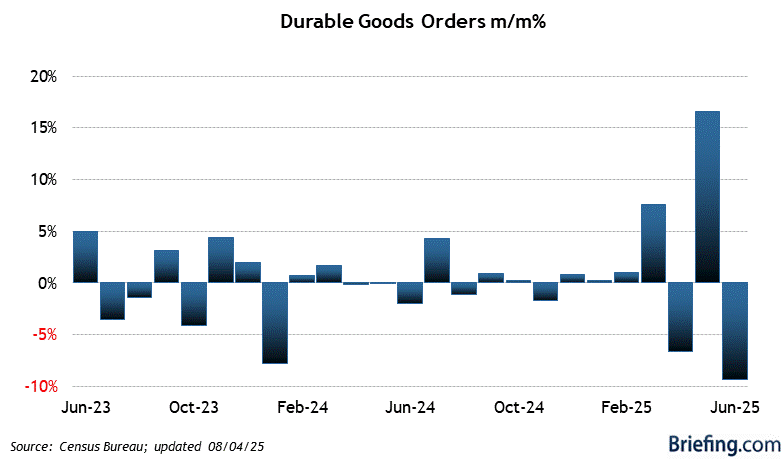
Then, there's the durable goods order increase of 7.4%.  So you understand, durable goods are things we or companies buy that last a long time.  Things like aircraft and appliances like refrigerators or stoves.  But, again, this huge increase doesn't jive with individual monthly reports on durable goods orders growth.
 
As you can easily see, every monthly change in durable goods orders was negative from August through December.  Call me crazy, but it is a little hard to add up a bunch of negatives and get a positive 7.4%.

In my mind, the only reason that this report wasn't negative for GDP growth was because of the hard-to-believe strength in personal consumption and durable goods ordering.  Now, the people who put this report together have 3 more months to revise their data.  Could it be that this report was purposely "adjusted" this first time around so as not to embarrass their boss, Barack Obama, after he made such a big thing of the economy in the State of the Union address?  We'll see if future revisions are downward.
 
References:

US economy cools in fourth quarter, but consumer spending shines: http://www.reuters.com/article/2015/01/30/us-usa-economy-idUSKBN0L30BC20150130

Gross Domestic Product: Fourth Quarter and Annual 2014 (Advance Estimate): http://www.bea.gov/newsreleases/national/gdp/gdpnewsrelease.htm

Obama heralds economic recovery in State of the Union: http://www.msnbc.com/msnbc/obama-heralds-economic-recovery-state-the-union-address
 

Wednesday, May 21, 2014

Retailers Are Signalling Economic Woes For 2014

In the first quarter of this year, the nation's economy, as measured by Gross Domestic Product (GDP), grew at a barely measurable rate of one-tenth of one percent. That was a 93% miss from the 1.5% that the economists were originally projecting.  In defense of this horrible number, the Obama Administration blamed the lack of economic growth on low consumer spending; all because of the bad weather in the Northeast and Midwest in January through March of this year.

However, having lived in the Midwest for many years, the forecast of a bad storm actually forces store shelves to be emptied.  People buy things they otherwise might not buy; like snow blowers, generators, space heaters and a whole host of other products.  They stock up on food and water.  And, after the storm has passed, consumers replenish what they used and typically buy the things they weren't able to   during the storm.  So, typically, the economic impact is not that significant; especially since most of the rest of the country is unaffected by any regional activity.

The problem with the "bad weather" excuse is that it ignores a deeper problem that is hurting our economy.  That problem that consumers aren't buying like they used to. The major retailers such as Wal-Mart, Kroger, Target and Macy's are all seeing changes in buying habits.  People aren't splurging on non-essential products.  In fact, they also aren't buying as much food. Wal-Mart, despite having lower grocery pricing than their competitors, has consistently seen a drop in grocery revenues.  Last quarter, grocery sales, among all the stores that were in operation a year or more, dropped nearly 1%.

Going forward, every retailer is warning that their earnings are at risk this year due to a slow down in consumer spending.  Since consumer spending makes up 70% of GDP, any drop could cause the economy to stall and, as a result, fall into another recession.  If the next revision of the current GDP growth of 0.1% goes negative in a couple of weeks, it could signal the first of two quarters of negative growth which, by definition, is a recession.

References:

Target echoes warnings about cautious consumer patterns: http://www.ktvu.com/videos/business/economy/target-echoes-warnings-about-cautious-consumer/v9dRG/

Wal-Mart is hurting for shoppers: Wal-Mart woes deeper than winter snow: http://money.cnn.com/2014/05/15/investing/wal-mart-weather-earnings/

Wal-Mart's biggest problem: Its customers: http://www.cnbc.com/id/101680657

Kroger...cautious in its earnings guidance for the year, citing uncertainty around the economy: http://supermarketnews.com/retail-amp-financial/kroger-marks-10-years-positive-comps

First-Quarter U.S. Economic Slump Looking Uglier by the Day: http://www.bloomberg.com/news/2014-05-06/first-quarter-u-s-economic-slump-looking-uglier-by-the-day.html

Sunday, December 29, 2013

Obama's Predictions On The Sequester Never Came True

Back in February, our big-government and big-spending President predicted dire consequences if the $85.4 billion in Sequester spending cuts went into effect on March 1.  He said it would cost jobs and could harm our fragile economy.  Despite his warnings, the Sequester automatically kicked in because Congress could not come up with an alternative budget agreement.

So, the President, in order to prove how right he was, decided to make the cuts as obvious and painful to Americans as possible while completely laying the blame at the feet of the Republicans.   He shut down the White House tours.  He closed federal parks. The Blue Angels and Thunderbirds were grounded.  Even tax refund checks were delayed; and, the list goes on.

But what has really happened since sequestration?

Well, the economy has grown at the fastest pace in 2 years with Gross Domestic Product (GDP) moving from a snail's pace of 1.8% in the first quarter of 2013; to 2.5% in the 2nd quarter; then, galloped to 4.1% in the 3rd quarter.  In another measure of economic growth, Federal tax revenues hit a record high of $2.47 trillion this year; up $285 billion from the prior year.  Then, contrary to the Obama prediction, the unemployment rate fell from 7.7% in February to 7% in November.  This was the lowest rate since March of 2009.

Lastly, the very same President who condemned the Sequester spending cuts back in February, has now decided to take credit for those same spending reductions and the resulting deficit reduction.  On July 24th, in front of an adoring crowd at Knoxville College in Illinois, he proudly proclaimed: "Our deficits are falling at the fastest rate in 60 years."

You see, with Barack Obama, everything is either a shading of the truth, a half-truth, or an out-and-out lie.  The fact is that the Sequester cuts were a mere pin-prick against the massive spending levels that  he has created.  They were not going to have some enormous impact on the economy or on unemployment.  Also, the idea of the Sequester, itself, originated out of Obama's White House. No way could the Republicans be blamed for it.  And, to take credit for the reduction in the deficit is just plain hypocrisy.

Wednesday, July 25, 2012

How Bad Was The Economy In the 2nd Quarter?


On July 27th, the federal government will release the initial data that reflects the economic activity of this country for the second quarter of this year.  That data, the growth in Gross Domestic Product or GDP, was originally expected to be about 2% in growth.  But, in each of the 3 months that comprise the 2nd quarter, retails sales activity  fell consecutively and, unexpectedly.   A fact that hasn't happened since 2008; at the height of the so-called Great Recession.  Now, economists have lowered their estimates; with economic growth slowing to between 1 and 1-1/2 percent.  But, I think they're still wrong; and, it all has to do with high gasoline prices.

In two of the three months that made up the second quarter, April and May,  oil prices were rising rapidly; with many cities seeing $4+ gasoline.  The reason that this is important to note is because gasoline prices are part of the overall retail sales numbers.  For that reason, higher gas prices have always helped to push up the retail sales data.  But, instead, retail sales fell in both April and May.  So, this means that those high gasoline prices were actually making those negative retail sales numbers look a lot better than they really were, and, I don't think economists are taking this into consideration when estimating the growth in GDP.  For that reason, it is highly possible that 2nd quarter GDP growth will be lower than 1%.  If so, this would be a really horrible number at near-recession levels.   Of course, the numbers could wind up being better than expected since the group putting the numbers out, the Bureau of Labor Statistics (BLS), reports to Obama.  After all, the BLS will have two more monthly attempts to get the numbers right.

Friday, June 1, 2012

Obama's Three-Strikes Week

This week was a really bad one for President Obama.  In one report after another, the economy looks to be faltering. This for a man who would want you to believe that his policies have turned things around and that we were on the right track.

First, there was a 5-month low in the Consumer Confidence index with that measurement falling from 68.7 in April to 64.9 in May.  Typically, a falling "Confidence" number indicates that the consumer could be pulling back on spending. And, since consumer spending accounts for 70% of economic activity, future growth could easily be in jeopardy.

Then, yesterday, there was the Gross Domestic Product (GDP) number; an overall measure of economic growth and activity.  It was revised downward from a previously reported 2.2% to an extremely anemic1.9% for the first quarter of this year.   Keep in mind that you need at least 2.5% growth per quarter to make any real dent in the unemployment rate. 

Finally, there was the horrible employment report of this morning.  As yesterday's poor GDP report had foretold,  job growth was extremely anemic with only 69,000 jobs added last month.  For the first time in months, the unemployment rate rose; moving from 8.1% to 8.2% The so-called expert economists thought that 150,000 jobs would be created in the month with the unemployment rate either holding at 8.1% or falling to 8%; completely ignoring the previously reported poor GDP number of 2.2% a month ago (1.9% this morning).   As I have pointed out many times in this blog, you need at least 160,000+ jobs created every month; just to cover population growth. With that in mind, the mere addition of 69,000 jobs is actually negative job growth.

It's hard to believe that these three days of poor economic numbers, taken all together, are somehow a one-month fluke.  A fluke might have been just one of them --- like the jobs number -- being weak.  But, all three taken together paints a picture of a faltering economy.  And, I, for one, would be surprised if things get any better going into the Fall elections.  That's because bad news, in itself, tends to spook the consumer with the economy and job creation suffering in the process.  It could very well be that the 2nd Quarter GDP falls below 1% and unemployment rises to 8.5% in the months ahead.  If true, there is no way that Obama could or should win reelection.

Friday, January 27, 2012

2011 Economic Growth Nearly Half That Of 2010

While stumping for reelection, the President likes to hype that fact that the economy has been improving under his stewardship. Unfortunately, this morning's data on economic growth throws a lot of ice cold water on his personal and politically-driven viewpoint that he has somehow turned the economy around.

For the 4th quarter of 2011, the Gross Domestic Product of the United States only grew by 2.8% with the final, annualized growth rate for 2011 calculated to be 1.7%. That's nearly half the meager growth we saw in 2010 where the annualized GDP growth rate was only 3%. And, even that 3% growth in 2010 was horrible when you consider the fact that you need at least 2.5% growth in GDP to account for both population growth and inflation.

In effect, the economy actually contracted last year when you assume the 2.5% benchmark as minimum growth standard. And, I wouldn't count on 2012 being any better. That's because the consumer will continue to be hurt by higher prices for food, energy, clothing, health care, and eduction. All this at a time when wage increases are minimal, at best. And, if the consumer can't drive the economy, that 70% of our normal economic growth that will be marginalized.

Friday, October 30, 2009

What A Difference A Day Makes

Yesterday, there was mass euphoria over the first positive Gross Domestic Product in more than a year. The headlines said this showed that the recession was over. However, today's numbers on personal spending have somewhat put a dent in that excitement.

This morning the Personal Income and Spending Numbers were released and Personal Spending was down 1/2 of one percent. On a one month basis, that is huge (Click to See Full Story: "Income Flat, Spending Falls as Consumers Stay Wary").

The spending number is important because our economy is 70% driven by the consumer and his or her spending. Again, the drop in spending is being blamed on the fact that the Cash For Clunkers program ceased. But, don't forget, the Cash for Clunker program only benefited less than three tenths of one percent of the people of this country -- about 700,000 people out of a population of 300 million. So, to say that overall spending was impacted by the cessation of this program, clearly shows how that program had skewed the economic numbers and had little or no overall benefit to the general population.

Yesterday, I said that if you dug down into the details of the GDP report, you would have seen that business investment was negative. That means that businesses aren't buying things. This morning shows that personal spending, too, is missing. Put those two facts together and you can see that the "spending" that is needed to turn the economy around is not there. That's why I am not sure that yesterday's growth in terms of GDP is sustainable.

Update: This blog was written just before the stock market opened. When it was actually posted, the market was only down about 3 dozen points. As of now (12:30 Pm Eastern), the market is down nearly 200 points and has wiped out all of yesterday's euphoric gains. I think this shows that my concerns over spending are being validated by today's trading behavior in the stock market.